In an e-commerce project, logistics is often seen as a simple operational expense. It generally includes the receipt of goods, storage, order picking, and shipping. Yet, this simplified view hides a much more complex reality.
Logistics costs in e-commerce are not limited to transport or order preparation. They encompass many elements, sometimes invisible, that directly impact profitability. In practice, many brands do not know their exact logistics costs, which often leads to lower-than-expected margins.
Understanding what truly makes up these costs is therefore essential to calculate them accurately… and above all, to control them.
What do logistics costs really include ?
In many e-commerce business plans, logistics costs are often associated only with transport or a simple preparation fee. In reality, they cover several essential elements throughout the order lifecycle:
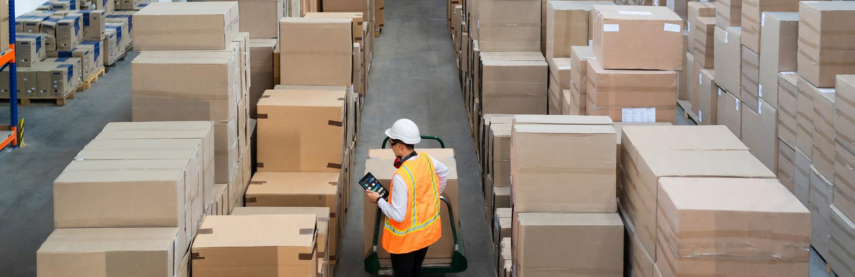
- Receiving and stocking: This involves receiving goods, checking products, and storing them in the warehouse. This step requires human time and logistical resources.
- Storage: Products occupy physical space (shelves, warehouse), generating fixed costs (rent, utilities, management). The longer a product stays in stock, the higher its cost.
- Order preparation (picking/packing): This involves retrieving products from stock (picking) and then packaging them (packing). This step is directly linked to order volume.
- Packaging: Boxes, envelopes, protective materials… These are essential for safely shipping products and represent a variable cost per order.
- Transport: This refers to delivering the package to the customer. It is often the largest cost, varying by weight, destination, and carrier.
- Customer service (CS): This includes handling customer inquiries, complaints, or returns. Often overlooked, it represents a real cost in time and resources.
Individually, these costs may seem small. But added together, they form a significant expense. For a typical order:
- Preparation: €2–3 → time spent by an operator to pick and pack the product
- Packaging: €0.80–1.50 → cost of boxes, protective materials, and consumables
- Transport: €5–8 → average shipping cost depending on carrier and destination
- CS: €0.50–1 → estimated cost for customer support and order tracking
In total, real logistics costs often reach €8–12 per order. With an average basket of €40, this represents 20–30% of revenue.
In other words, a significant portion of each sale is absorbed by logistics. If these costs are not closely monitored and optimized, they can quickly reduce margins. And these elements represent only the visible part of the iceberg.
Hidden logistics costs that impact your profitability

Beyond direct logistics costs, some elements are often underestimated, or even completely ignored.
1. The cost of returns
Return costs are one of the most significant and underestimated expenses in e-commerce. This is especially true in sectors like fashion, where returns can reach 30–50% of orders. A large portion of shipped products often comes back to the warehouse.
Contrary to common belief, a return is not just reverse transport. It triggers an entire chain of logistics operations:
- Package reception: the return must be logged and processed upon arrival
- Product inspection: check condition (new, damaged, incomplete…)
- Restocking or reconditioning: the item is either resold or requires intervention (repackaging, cleaning, etc.)
- Refund: administrative and financial processing of the order
- Customer service management: communication with the customer (questions, complaints, follow-up)
Result: the cost of a return is not limited to transport. Considering all operations, a return can cost between €6 and €15 per item. If these costs are not anticipated from the start, they can severely impact overall profitability.
2. The cost of dormant stock
Another often underestimated expense is dormant stock. In a warehouse, some products can remain for months or even over a year without being sold. At first glance, this may seem harmless… but in reality, these products generate ongoing costs. Dormant stock has several impacts:
- Wasted space: these items take up warehouse space that could be used for faster-selling products
- Cash tied up: money invested in these products does not generate revenue until sold
- More complex management: more stock increases the complexity of inventories, movements, and organization
- Slower stock turnover: slow-moving stock reduces overall logistics efficiency
Result: the longer a product stays in stock, the higher its logistics cost. This phenomenon gradually turns storage into a silent cost center, difficult to identify but highly impactful on profitability.
3. The cost of picking errors
Order preparation errors are another significant logistics cost, often underestimated. They typically occur during picking or packing and can have several consequences:
- Wrong product sent: the customer receives the wrong item, negatively affecting their experience
- Product return: the package must be sent back, generating additional logistics costs
- Reshipping: sending the correct product doubles shipping and preparation costs
- Customer service intervention: handling complaints, tracking the case, possible goodwill gestures
Even a low error rate (0.5–1% of orders) can have a significant impact at scale. For example, with 10,000 orders, this represents 50–100 errors, with high cumulative costs.
How to calculate and manage logistics costs better

To sustainably improve profitability, it is essential not to simply endure logistics costs but to manage them precisely and systematically. This requires several key actions.
Calculate the actual cost per order
The first step is to calculate the real cost per order. Do not limit yourself to visible costs like preparation or transport; include all expenses, including hidden costs such as returns, errors, or storage. This calculation provides a clear view of each order’s profitability and allows informed decision-making.
Track the right metrics
Tracking key metrics is crucial. To manage logistics effectively, it is essential to regularly measure cost per order, return rate, picking error rate, and stock turnover. These indicators help quickly identify deviations and implement corrective actions before they impact overall performance.
Continuous optimization
Logistics should be seen as a continuous improvement lever. Managing logistics is not just about fixing occasional mistakes; it involves regularly analyzing performance, adjusting transport, storage, and picking processes, and implementing the right tools. Well-managed logistics reduce costs, increase efficiency, and improve customer experience.
FAQ – E-commerce logistics costs
What is the logistics cost of an e-commerce order?
It includes all expenses related to an order: receiving and stocking, storage, picking/packing, packaging, transport, and customer service. It also covers often invisible costs like returns and dormant stock.
Why do returns significantly increase logistics costs?
Each return triggers multiple operations: reception, inspection, restocking or reconditioning, refund, and customer service. These combined operations can raise the real cost of a return to €6–15 per item.
What is dormant stock and why is it costly?
Dormant stock refers to products that remain in the warehouse for a long time without being sold. It ties up cash, occupies space, complicates management, and slows stock turnover, increasing overall logistics costs.
How do picking errors affect profitability?
A picking or packing error can result in sending the wrong product, returns, reshipping, and customer service intervention. Even a low error rate (0.5–1%) can have a significant impact at scale.
Which metrics should be tracked to manage logistics costs?
Key KPIs include cost per order, return rate, picking error rate, and stock turnover. They help identify inefficiencies and optimize logistics performance.
How can logistics costs be reduced while improving customer experience?
By calculating real cost per order, identifying hidden costs, automating processes (picking, transport, returns), and managing logistics strategically. Optimized logistics reduce costs and improve customer satisfaction.
Logistics, a strategic lever for e-commerce profitability
E-commerce logistics should no longer be seen as just a cost center. When well-managed, it becomes a true lever for performance and competitiveness. Understanding what makes up logistics costs allows businesses to better calculate order profitability, identify hidden expenses, reduce operational errors, and optimize both transport and storage.
Analyzing each logistics component in detail (preparation, transport, returns, storage) is essential to manage profitability effectively. This approach reduces costs while maintaining or even improving operational performance and customer satisfaction.
👉 Want to identify your main logistics optimization levers and assess your 2026 challenges?
Contact us!